More car stories
I drove to Chester on Tuesday. Shortly before I arrived my car developed a slow puncture in a rear tyre.
It’s happened before (on the same route, so I knew where to get it fixed) but on this occasion it was the same tyre that was fitted only last week when my car had its MOT. However, the damage was beyond repair so I had to buy another new tyre at a cost of £291.
One thing I learned from that previous experience was not to leave it until the next day because, even though it might only be a slow puncture, the weight of the car will ensure that, the following morning, the tyre will be completely flat .
Generally, though, I’ve been fairly lucky with punctures or, worse, breakdowns. I had one car that was a bit prone to punctures, so the next car I bought had run-flat tyres which have reinforced sidewalls that prevent the tyre collapsing if you get a puncture. It also means you can keep driving for up to 50 miles at a maximum of 50mph, which is enough for you to find a garage and get the car off the road.
The downside of run-flats is that the ride can be a bit firmer, but if the suspension is already quite firm, as it tends to be on German cars, you probably won’t notice a big difference, and the peace of mind it gave me was worth the slight loss of comfort (which I wasn’t even aware of).
My current car doesn’t have run-flats and when I asked if they could be fitted retrospectively I was told I would need new wheels as well because run-flat tyres don’t fit the existing rims. Replacing standard tyres with non-factory fitted run-flats is also considered a ‘modification’ so you have to tell your insurance company in case it invalidates your policy, so it’s a bit more complicated than you might think.
Thankfully I’ve never had a genuine tyre blowout. It happened to a friend once when a tyre on his Peugeot 205 GTI burst while he was driving at speed on the M40 in Oxfordshire. As a result he lost control and the car hit the central barrier and flipped over several times. Or that’s what he told me. Either way it was a write-off, but he escaped largely unscathed.
In my experience modern cars are pretty reliable and rarely break down, although some models are better than others. When I was a child however it was common to see drivers stranded by the roadside waiting for the AA or RAC to come and fix their cars or tow them away.
The most annoying breakdowns are when you’re far from home and in an isolated, rural area late at night. I was in Wiltshire once, driving to London shortly before midnight on a Saturday night, when the petrol tank on my Mini Metro split in two, spewing fuel all over the road, while the car crawled slowly to a halt.
We were miles from anywhere and it took the AA a couple of hours to reach us. The car was winched on to a recovery vehicle and we were eventually dropped off at home at six o’clock in the morning.
I was more fortunate when the cam belt on my next car - a Ford Fiesta XR2 - snapped. I say ‘fortunate’ because if a cam belt breaks while you driving at speed it can do enormous damage to the engine. According to Gemini, Google's AI assistant:
If a cambelt (timing belt) snaps while driving, the engine will instantly lose power and cut out, usually causing severe, costly internal damage. Pistons can strike valves, resulting in bent valves, damaged cylinder heads, or total engine failure. It is a critical failure requiring major repairs or a full engine replacement.
When the cam belt on my Fiesta broke I was driving along Chiswick High Road in west London doing no more than 10mph so I managed to avoid any damage to the engine. This was 35 years ago and when it happened I had never heard of a cam belt. I discovered that they were generally made out of rubber and lasted anything between 50,000 and 100,000 miles.
Today many cars have metal timing chains instead of a rubber belt, but models vary so it’s best to check. All I know is, it’s a long time since I’ve been advised to change the timing belt on a car, even one that has done in excess of 100,000 miles, but don’t blame me if yours breaks!
A decade or so earlier, when I was 20, I was driving my mother’s Triumph Vitesse across the Pennines to Richmond in Yorkshire when steam began pouring from the engine. It was dark and extremely cold with snow on the ground, and I was in an isolated part of the North Yorkshire Dales. I knew nothing about engines (I still don’t) but a quick inspection revealed that water had leaked from the radiator and the engine was over-heating.
I remember stopping at a remote farmhouse where I was given water to refill the radiator, but after a few miles it happened again. And again. Eventually, with the help of several strangers who opened their doors to me (despite it being New Year’s Eve), I arrived in Richmond several hours later than planned.
What I didn’t know at the time was:
If water in your car’s radiator freezes, it expands by approximately 10%. This expansion can shatter the radiator, rupture hoses, and – most catastrophically – crack the engine block or cylinder head. This often results in total engine failure or repairs costing more than the vehicle's value.
Hence the need for anti-freeze.
Anyway, a day or two later I managed to find a small garage in Richmond that came up with a temporary but ingenious solution that enabled me to drive home – they used egg white as a sealant. And it worked.
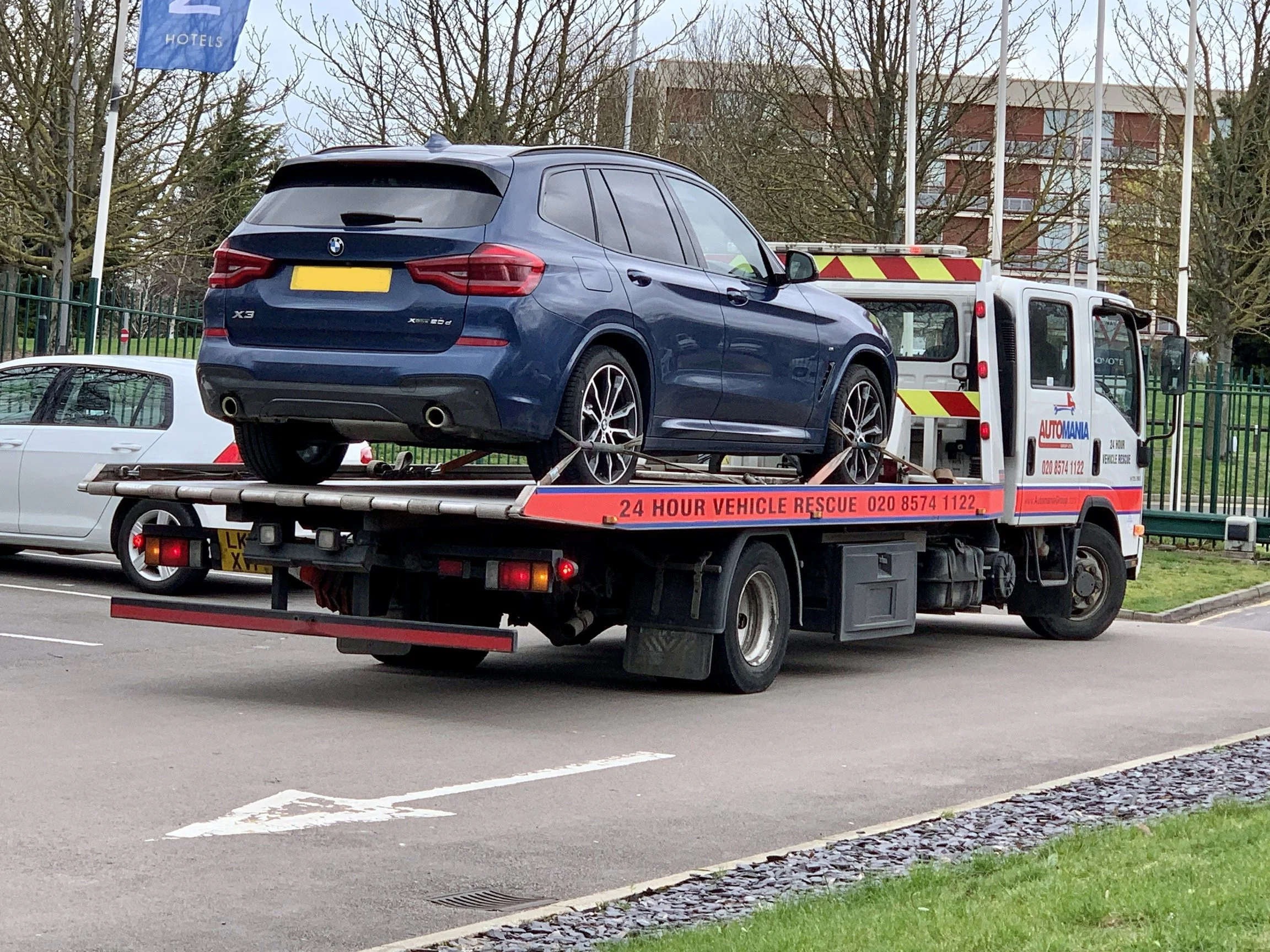
Ironically the most recent ‘breakdown’ I’ve experienced involved the only car I’ve ever owned from new which I’d had for less than three months. I was driving to Heathrow on the M25 when huge clouds of smoke began belching out of the exhaust pipes. The initial warning signs told me I could continue driving, albeit slowly, but when I got to the M4 they were telling me to stop and turn off the engine, which I did after turning off the motorway and in to a hotel car park.
I was in that car park for six hours before a recovery vehicle came and took the car away. Thankfully the manufacturer had a repair shop nearby and, although it took two weeks for the car to be repaired, I was given a courtesy car.
Unfortunately I think that particular vehicle was cursed because, within two years, it was written off as a result of flood damage. The good news is that its replacement (which is the same model) has, touch wood, been trouble free, apart from a couple of punctures ….