
How far will Andy Burnham go to make smoking history?
Despite the quivering lip as he announced he would be standing down as prime minister (without naming a date), Keir Starmer will get no sympathy from me.
This, after all, is the man who took aim at the likes of Boris Johnson and implied he was morally superior to his political opponents, despite being the same man who accepted a shadow cabinet position under Jeremy Corbyn and then suspended Corbyn from the Labour Party as soon as it was expedient to do so.
However, I won’t go into all my other grievances against Sir Keir (how that title grates!) because what is there to say about a man who achieved so little in office? Instead, this post is about his heir apparent, Andy Burnham.
If I was a Labour MP I’d be in two minds about Burnham. On one hand I’d be relieved that the Starmer era is almost over because it might change the political dial in my party’s favour and offer hope that I might retain my seat at the next General Election. On the other hand it would irritate me enormously that someone who lost two leadership elections and left parliament almost ten years ago is returning to Westminster with the clear expectation of being parachuted in to Number Ten without troubling party members or the electorate at large (outwith a small constituency in Greater Manchester).
He may be ‘King in the North’ (sic) but it’s largely forgotten that Burnham held three senior ministerial positions under Gordon Brown at the fag end of the previous Labour government. Even if you do remember that, can you name them? For the record, they were Chief Secretary to the Treasury, Secretary of State for Culture, Media and Sport, and Secretary of State for Health.
Following Labour’s defeat in the 2010 General Election Burnham kept the health brief and was Shadow Secretary of State for Health for over five years. But it took the election of Jeremy Corbyn as party leader in 2015 for him to be promoted to Shadow Home Secretary, a job he held for just over a year before he resigned to focus on becoming mayor of Greater Manchester.
Such was Burnham’s lack of impact – both in government and opposition – I had completely forgotten his roles as health secretary and shadow health secretary, even though that period (2008-2015) coincided with several anti-smoking initiatives including the tobacco display ban, the ban on tobacco vending machines, the ban on smoking in cars carrying children, and legislation that led to the introduction of plain packaging.
Although he was a keen supporter of the display ban, Burnham didn’t instigate it, he inherited the policy from his predecessor, Alan Johnson. Likewise, I don’t remember him playing a significant role in the plain packaging debate, unlike his far more dynamic colleague Luciana Berger, the Shadow Minister for Public Health, whose other ‘triumph’ was to effectively force David Cameron’s government to ban smoking in vehicles carrying children.
In contrast, Burnham’s plan to extend the smoking ban to the entrances of public buildings, including pub doorways, was abandoned and forgotten almost as soon as it was announced in February 2010. Fast forward to 2013 and his next ‘big’ idea was to ban tobacco companies from advertising at Labour’s annual conference ‘after one company bought space at this year's event’. Hold the front page!!
Elected mayor of Greater Manchester in 2017, Burnham soon found himself among like-minded political soulmates. As I discovered when organising a Forest event at the Labour Party conference in Manchester in 2009, the Labour-run city council wouldn’t permit anyone with a connection to the tobacco industry to organise an event in the imposing town hall, so leading the region’s ‘Make Smoking History’ campaign, which was launched in 2017, was a natural fit for the new mayor.
Last year, having pledged that Greater Manchester would become the first city region in Europe to be ‘smoke free’, the region was presented with a 2025 Partnership for Healthy Cities Award. Hailing it as a ‘milestone moment for Greater Manchester’, Burnham declared:
“Our work on Smokefree Spaces and Smokefree Hospitals is a sector-first, creating an environment where smoking is no longer the norm. This isn’t just about reducing smoking rates – it’s about transforming lives, communities, and the entire city-region.
It’s fantastic to see our efforts recognised on the global stage. This award reflects the dedication of our partners, communities, and residents in making a real, lasting difference. Over the next six years, we will continue to drive forward our Making Smoking History strategy—helping more people quit, preventing children from starting, and creating smokefree spaces that protect public health and promote healthier futures for all.”
However, despite the award, Manchester is still many years away from achieving Burnham’s ‘smoke free’ goal. In fact, in 2025, the city’s adult smoking rate was estimated to be over 14%, significantly higher than the national average (in England) of 10.6%.
I suppose the question we should now be asking is, will Andy Burnham take Manchester’s ‘Make Smoking History’ campaign nationwide and, if so, what can we expect? According to a report in the Guardian in February 2010:
‘The move [to ban smoking in the entrances of public buildings] comes as part of a wider attempt by Burnham to set out the case for state intervention to improve public health, insisting it does not amount to a nanny state.’
Labour lost the subsequent election so Burnham didn’t have the opportunity to put his somewhat vague plan into action, but it’s worth noting that Manchester City Council is currently one of only a handful of local authorities that require all pavement licensing – which allows cafes, bars and restaurants to place tables and chairs outside on the pavement – to be completely smoke-free.
The likes of ASH and the Local Government Association have been pushing for that policy to be made compulsory nationwide since 2020, so will Burnham give them what they want? And what about banning smoking at the entrances to public buildings? As prime minister will he give the green light to a policy he first contemplated as Secretary of State for Health 16 years ago?
He will surely have far more important issues on his plate but the same could have been said of Rishi Sunak and Keir Starmer when they introduced their Tobacco and Vapes Bills in 2024 and 2025. It’s unlikely therefore that we can expect much relief from more nanny state policies, and it won’t just be smoking. The question, I suspect, is not if but when. And how far will the new PM go? I imagine we’ll find out at the Labour Party conference in September.
PS. In 2009, six years before Burnham announced that Labour would introduce plain packaging “immediately”, he wrote a letter to Labour MP Tessa Jowell that suggested he was less than convinced that the policy would reduce smoking rates:
There is some evidence to suggest that packaging may increase brand awareness among young people, and may mislead people about the relative safety of different tobacco products. However, as yet, no studies have shown that introducing plain packaging of tobacco would cut the number of young people smoking or enable people who want to quit, to do so.
Given the impact that plain packaging will have on intellectual property rights, we would need strong and convincing evidence showing the health benefits of this policy before it would be acceptable at international level.
So what changed? The evidence? Perhaps, or, like most politicians, Andy Burnham is what we call a ‘flexible friend’. Either way, he’s no friend of ours.
See: The mystery of Andy Burnham's missing letter, Labour to launch war on consumer choice and parental responsibility (January 2015), and Does Make Smoking History want to make vaping history too? (September 2022)
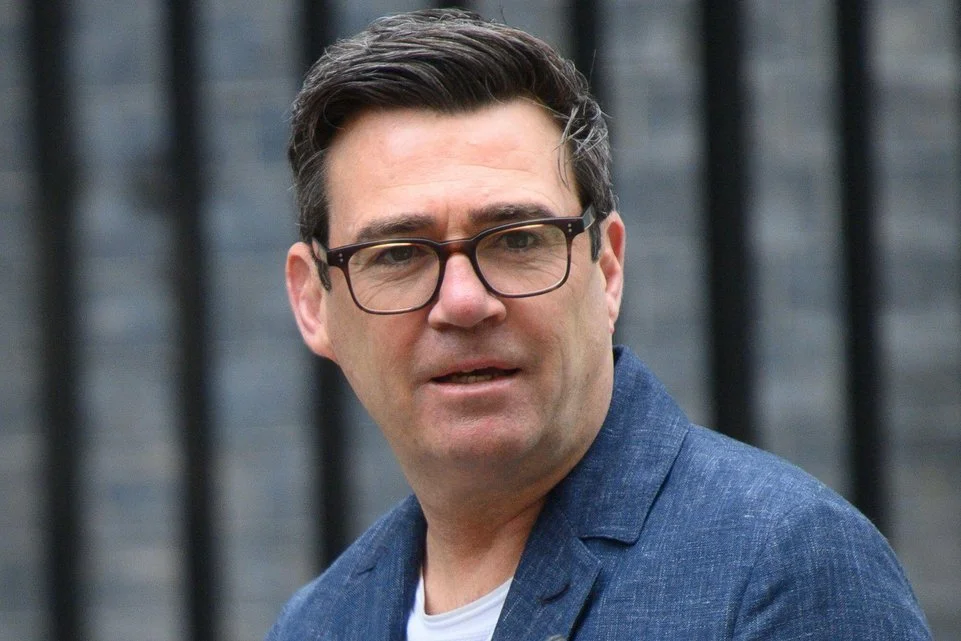
Photo: Alamy/Justin Ng
