
Consultation – final call
The closing date for the Government consultation on ‘Smoke-free, heated tobacco-free and vape-free places in England’ is this Friday (May 8).
I know many of you are sceptical about ‘public’ consultations, and I’m with you on that. In my experience it’s rare that public consultations – especially in the field of ‘public’ health – change government policy because ministers usually have a plan and it would take a tsunami of submissions from members of the public opposed to that plan before they changed direction or abandoned it.
The nearest Forest got to derailing a proposed policy at the consultation stage has been well documented on this blog, and it could be argued that we succeeded (for a while at least) but here’s a quick recap.
In May 2012 the Conservative-led coalition government announced a three-month public consultation on standardised packaging of tobacco. We knew we were up against it because the previous consultation on tobacco control (conducted under Gordon Brown’s Labour government) had resulted in something like 96,000 submissions in favour of further regulations (including a display ban), with around 12,000 opposed.
Of course, it turned out that most of the submissions supporting the Government’s plans were generated from within the public sector, but it was a useful lesson so when the plain packaging consultation came around we were determined to at least win the numbers game.
That came at a price, though, because to win that battle we had to conduct hundreds of street petitions in towns and cities around the country. Word got back to the Department of Health and the consultation period was extended by four weeks in order, we think, to give the anti-smoking lobby more time to gather signatures in favour of plain packaging
There was also a rather pathetic attempt to smear our campaign with allegations of improper conduct regarding the collection of signatures.
As I wrote here, the plain packaging consultation received 665,989 campaign responses from 24 separate campaigns. Forest’s Hands Off Our Packs campaign led the way with over 250,000 responses, but in total around two-thirds (427,888) opposed the introduction of standardised packaging, with around one-third (238,101) in support.
Consultation reports are normally published within three or four months of the closing date, but the report on the plain packaging consultation took almost a year (eleven months) to appear, and after it was published the policy was kicked into the long grass where it stayed until prime minister David Cameron was persuaded to introduce legislation so that plain packaging didn’t become an issue ahead of the 2015 general election. (If I remember, Labour threatened to follow him around the country with a man dressed as a giant cigarette, or did I dream that?)
Anyway, that’s an example of what can be done, if there’s the will, and the money. Unfortunately, while the desire to fight subsequent proposals (including the generational sales ban) has always been there, we’ve not had the resources to launch a similar high profile campaign, and that has limited our ability to enlist public support.
The same is true of the current consultation but there’s an additional problem because, in the wake of the generational sales ban (which is now law), the anti-smoking measures now being proposed by government are considered – even by smokers – to be, in the overall scheme of things, of minor importance. A nationwide ban on smoking outside schools, children’s play areas and hospitals, for example, won’t affect the vast majority of people, including smokers, so there’s very little incentive for smokers to respond to the consultation.
The reason those bans should be opposed, though, is two-fold. One, with the number of smokers in long-term decline, there is little evidence that a significant number of smokers light up outside schools or in children’s play areas. Two, if the aim is to ‘protect’ a handful of children from the sight of someone smoking, the next logical step will include every park and beach where a child might conceivably be present.
Another, arguably more pernicious, aim is to further stigmatise adults who smoke because the ban will no doubt be enforced not by marshals patrolling the school gates but by signage designed to make every parent who smokes – even the overwhelming majority who don’t smoke outside schools and play areas – feel guilty about their habit.
Credit: iStock/track5
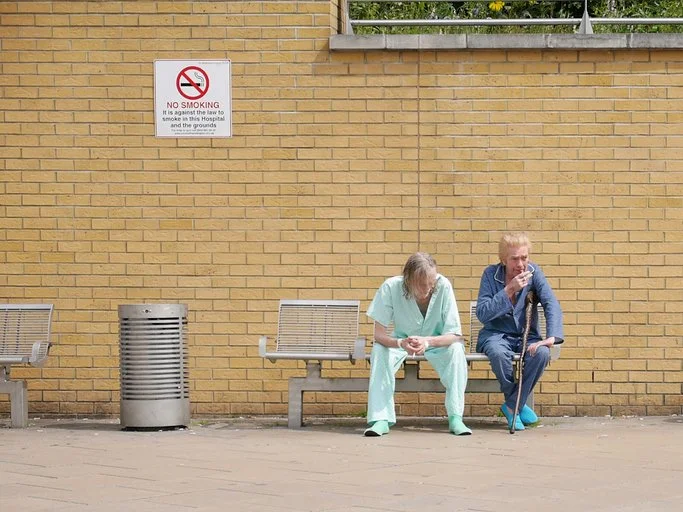
As for a nationwide ban on smoking outside hospitals, it may seem counterintuitive to oppose it, but I actually feel more strongly about that than almost anything else. Where is the empathy for patients, visitors and even staff for whom a cigarette may provide some comfort, or pleasure, during what may be a particularly stressful time?
For many years I was interviewed countless times by a local BBC radio presenter. I won’t mention his name but he was fiercely anti-smoking and we used to have terrific arguments, which I didn’t mind at all. In a one-to-one interview I expect the presenter to play devil’s advocate and challenge my position. A few years ago, however, we were discussing smoking outside hospitals and he revealed that his father, a smoker, had terminal cancer and was in hospital but wasn’t allowed to go outside and have a cigarette in the open air, on the grounds of the hospital. As I remember it, we both agreed that it was an incredibly cruel and heartless thing to do to someone in that situation.
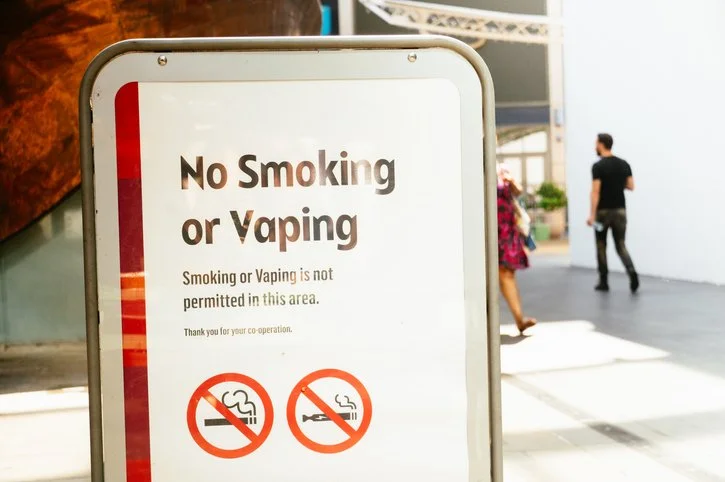
There’s another side to the consultation, of course, and that’s the proposal to ban vaping in all enclosed ‘public’ places, just like smoking. This plan – which the Government says is its preferred option – is absurd for multiple reasons, not least the fact that if ministers want to encourage smokers to switch to a reduced risk product, banning vaping in indoor ‘public’ places, including every pub and bar in England, is hardly the way to do it.
For once I agree with Clive Bates, the patron saint of vaping and a former director of ASH, who argues that there is no justification for a vaping ban because it undermines property rights and there is no evidence of harm from secondhand vapour. Correct, except that, if you swap ‘secondhand smoke’ for ‘second-hand vapour’, these are the very same arguments we used to oppose the workplace smoking ban, which Clive and the entire tobacco control community support and frequently celebrate.
To those who claim there is a big difference between secondhand smoke and secondhand vapour, I suggest they do some research and, if they ignore the propaganda, they will find evidence that the risks associated with exposure to secondhand smoke are relatively small. As for property rights, this is fundamental because pubs, bars and cafes, to name just three, are private businesses and policies on vaping, like smoking, should be a matter for the owner, not government.
Anyway, if I hear one more vaping advocate refer to the consultation as the ‘vaping ban consultation’ I’m going to scream. It may suit their agenda to ignore the fact that the consultation is also about smoking, but sooner or later the chickens are going to come home to roost because one day every policy applied to smoking will be applied to vaping as well.
In the meantime my hunch is that the Government won’t ban vaping in all indoor public places – not yet anyway – so unless Labour is re-elected at the next general election (which seems unlikely) I can’t see it happening any time soon. If I had to guess, I predict vaping will be banned in shops and offices, but hospitality venues, like pubs and bars, will be exempt.
That said, I’ve learned not to be complacent so do submit your views to the consultation before 23:59 on Friday. Click here.
PS. In July 2016 Forest commissioned an independent team of researchers to carry out an analysis of smoking incidence in four parks across London – Queen’s Park, St James’ Park, Victoria Park, and Queen Mary and Mile End Park – in order to assess how prevalent smoking was in the capital’s green spaces. The research found that the number of people smoking in the four parks under observation represented an insignificant proportion of visitors, comprising an average of 1.6% of total park visitors.
The research didn’t focus specifically on children’s play areas in those parks but I don’t think it’s a leap of faith to suggest that the incidence of smoking in those areas would have been equally insignificant – and that was ten years ago when more people smoked. The point is, if the Government supports evidence-based policy then show us the evidence that a significant number of adults smoke outside schools or in or around children’s play areas. Likewise, where’s the evidence that the sight of a non-family member smoking a cigarette encourages children to smoke?
Or is that too much to ask?
Credit: iStock/MarioGuti
