
Lord Skidelsky, 1939-2026
Sorry to hear that Lord Skidelsky has died.
An economic historian best known for his three-volume biography of John Maynard Keynes, Robert Skidelsky enjoyed a nomadic and occasionally controversial political career, leaving the Labour Party to join the Social Democratic Party before joining the Conservative Party after being made a peer by John Major in 1991. After falling out with William Hague he then left the Tories in 2001 and became an independent peer.
Why am I writing about him? Well, during the Nineties he was a member of Forest’s Advisory Council which was set up by Chris Tame, one of my predecessors, to give Forest a bit more intellectual clout. It no doubt helped that Skidelsky was also friendly with Lord Harris who was chairman of Forest from 1987 until his death in 2006.
Like Harris, Skidelsky was sceptical about the risks associated with so-called ‘passive’ smoking, and they both argued against a total ban on smoking in public places. In March 2006, opposing the bill that introduced the workplace smoking ban, Skidelsky declared that a comprehensive ban was “grossly disproportionate and off target relative to the harm, such as it is, caused by passive smoking”. He added:
If there is a rational basis to the Bill, it seems to be this: the Government are determined to stamp out smoking or at least heavily reduce it from its present level of 25 per cent of the adult population. I am told that the Department of Health has a target for reducing smoking to 21 per cent by 2010. I do not know whether that is true, but it seems plausible. Since banning smoking outright would seem to be too gross an interference with liberty—there are still too many smokers around—the idea is to reduce it by claiming that it harms others. If there are fewer places in which people are allowed to smoke, it seems to follow that fewer cigarettes will be smoked. That seems to be the rational basis for this Bill.
What is wrong with that basis? If the attack on passive smoking helps to rid society of tobacco, is that not a good aim? The answer is that it is corrupt. The quality of information that the public receive is vital to the proper functioning of a democracy. I fear that we have got into the absolutely appalling state where it is widely accepted that the end justifies the means. We saw it with Iraq: it did not matter whether Saddam Hussein had weapons of mass destruction, we got rid of him, and wasn't that a good thing? The same attitude seems to be prevailing here. It does not matter whether passive smoking actually does do that much damage provided that the end result is a reduction in smoking.
There is also the not insignificant matter of the assault on freedom. An office with two persons is designated a smoke-free zone even if both occupants want to smoke. A group of smokers will not be able to form a private club. As far as I can make out, even private dwellings and private motor cars may at some time in the future be designated smoke-free zones on the order of the Secretary of State. So this Bill is not the end of a process; it is part of a process which may result in a much greater interference with liberty than is at present contemplated, grave though that is.
You can read the full speech here and it’s worth noting that, on similar grounds, he also opposed the ban on smoking in cars with children.
Sadly we are losing more and more independently-minded parliamentarians and I fear even more for the future if voices like Lord Skidelsky’s are silenced through death or the increasingly conformist age in which we live.
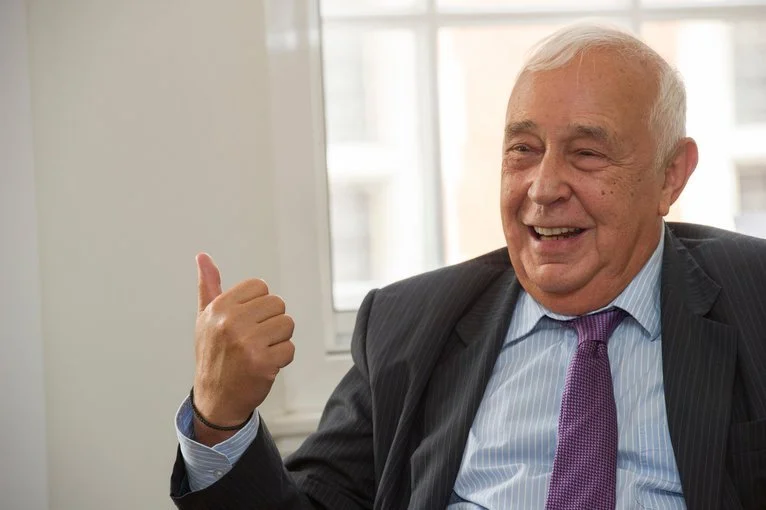
Lord Skidelsky. Credit: Nick Moore/Alamy
