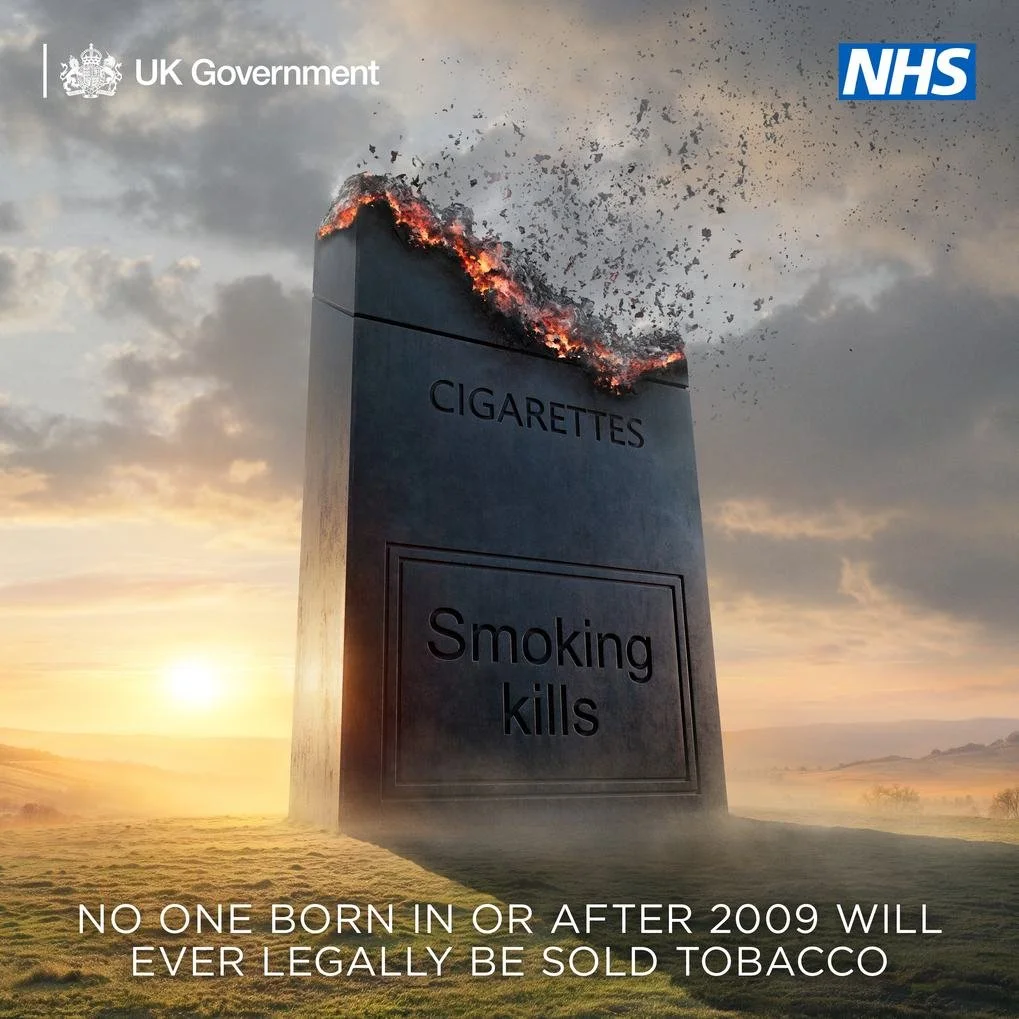
Today sees the launch of the Government’s ‘Smoke-free generation’ campaign which is designed to raise awareness of the new law that comes into force on January 1, 2027.
According to the DHSC website:
As part of the 10-Year Health Plan, the introduction of Smoke-free Generation legislation marks a major milestone in improving the nation's health. From 1 January 2027, anyone born in or after 2009 will never legally be sold tobacco, bringing us closer to a future free from the harms of smoking …
While the legislation is an important step forward, its success depends on public awareness, understanding and support. This toolkit provides campaign materials, key messages and practical guidance to help you, our partners, to raise awareness of the change, support the national Smoke-free Generation campaign, and ultimately to contribute to the successful implementation of Smoke-free Generation legislation.
I anticipated some media interest in the new campaign but, at the time of writing, I haven’t seen a single report by any news outlet. (A few councils have mentioned it on their websites but that’s the extent of it.) I’ve no doubt that the introduction of the generational ban on January 1 will trigger stories on and around that date, but I remember thinking the same thing before the enforcement of the smoking ban on July 1, 2007.
That was a Sunday and the story was a bit of a damp squib because it was almost 18 months since the legislation had been passed and by the time the ban was introduced the media had largely moved on. There was certainly no interest in revisiting the arguments, for and against, so from a Forest perspective it was very quiet.
The introduction of the gen ban from January 1 is arguably of much lesser interest because although the UK is the first country in the world to introduce it, and the long-term impact on next gen smoking rates could be significant (the jury is out on that), it will initially affect only a small number of people – those whose 18th birthday falls on or shortly after that day and want to smoke – and if they already smoke I can’t see the change in the law having much effect because they will surely continue to buy cigarettes from the same sources they did when they were 17.
Also, while the workplace smoking ban had an immediate and direct impact on millions of people (smokers and non-smokers alike), especially in pubs and clubs, the overwhelming majority of people, including all current adult smokers, will not be directly affected by the gen ban. Longer term of course it may be a different matter because it will almost certainly embolden governments here and abroad to intervene even more in people’s lifestyle.
Furthermore, if the gen ban does have a significant impact on youth smoking rates it will be several years before it can be properly quantified. According to the latest figures from the Office for National Statistics, 7.2% of people in the 18 to 24 age group smoked cigarettes in the UK in 2025, but we won’t know until October 2028 (when the ONS figures for 2027 are released) what if any impact the ban has had on smoking rates in that age group, let alone 18-year-olds in particular.
I’m guessing that any reduction will simply continue the downward trend of recent years but unless it’s a significant drop over and above the recent trend, how can government claim with any certainty that a particular policy was responsible (not that it has ever stopped them in the past)?
Anyway, expect to see posters and banners like the one below on billboards and social media over the next few weeks. Interestingly, in addition to English, the campaign has been translated into nine languages, one or two of which may surprise you. They are: Polish, Urdu, Punjabi, Romanian, Arabic, Bengali, Portuguese, Gujarati and Spanish.
You’ll find full campaign details here including, under ‘Campaign end date’, the rather unnerving information, ‘Always on’.